Spotting a defect is only the first step. Claimants and responding parties also need to preserve the condition, establish what happened, tie the issue to plans or standards, and document the resulting damage.
This guide covers the four common source categories of defects, typical defects by building system, a defensible documentation process, and the limits of photos and digital records without expert and legal review.
Key Takeaways
- Defects are commonly grouped as design, material, workmanship, and subsurface, though legal classifications vary.
- Document the condition before anyone repairs or alters it.
- Keep observed conditions separate from suspected cause, responsible party, and cost.
- A well-organized record supports experts, insurers, and settlement talks, but proves neither liability nor damages by itself.
Building Defect Types and Severity
What qualifies as a building defect?
A building defect is a departure from the applicable design, contract, code, manufacturer requirement, or reasonable performance expectation that causes a component or system to fail, underperform, or create damage. Florida's Chapter 558 defines it broadly, covering deficiencies arising from design, specifications, supervision, construction, repair, or remodeling.
A defect is not the same as ordinary wear, deferred maintenance, accidental damage, or a design preference. Three terms matter:
- Observed condition: what you can see, such as water staining below a window
- Underlying defect: the deficiency that may explain it, such as missing flashing
- Resulting damage: rot, mold, or finish failure
Until testing supports it, a cause is a hypothesis, not a fact.
The four common source categories
No single nationwide statute adopts a four-part classification, but investigators often use it:
- Design: errors, omissions, or poor detailing that ignore loads, drainage, moisture, or site conditions
- Material: defective, substituted, incompatible, or nonconforming products that fail despite proper installation
- Workmanship or construction: improper installation, poor sequencing, weak supervision, or departures from the plans
- Subsurface: inadequate soil preparation, grading, compaction, or drainage, or failure to account for expansive soils and settlement
Common defects by building system
One symptom can have several causes, so organize by affected component:
- Structural: foundation cracking, settlement, framing deficiencies, masonry failure
- Envelope and water management: roof, window, flashing, sealant, and waterproofing failures
- Mechanical, electrical, plumbing, and life safety: leaks, faulty wiring, poor ventilation, fire-safety gaps
- Interior finishes: uneven floors, failed tile, cracked drywall, peeling coatings, sticking doors
Water is the recurring theme. An ASCE study of 46 litigated envelope cases found allegations clustered around penetrations, weather-resistant barriers, and flashing. That is a litigation sample, not a national defect rate.
Major, minor, patent, and latent defects
"Major" usually turns on consequences, not how the condition looks:
- Safety risk or structural integrity
- Habitability or loss of essential function
- Costly remediation
Patent defects are observable on reasonable inspection. Latent defects are concealed or emerge only over time.
California, for example, treats them differently: four years for covered patent claims and ten years for covered latent claims. Those are California rules, not national ones. Texas sets minimum warranty periods of one, two, and six years for workmanship, systems, and major structural components in qualifying contexts.
Check your jurisdiction's codes, contract, and warranty language rather than assuming one definition.
Why classification does not establish liability
Labeling a defect narrows the investigation. It does not name the responsible party. Responsibility can depend on:
- Contracts, plans, approvals, and change orders
- Manufacturer instructions and site conditions
- Maintenance and later work by others
- Notice and expert opinions on causation and standard of care
How to Document Building Defects
Preserve the condition first
Handle safety and emergency mitigation first. Then preserve the affected condition as far as reasonably possible before cleaning, opening walls, or repairing.
The ABA advises giving advance notice before demolition or repair so other parties can inspect. In one New Jersey dispute, the court treated a party that inspected leaking windows differently from one never notified.
- Notify the owner, contractor, insurer, property manager, or counsel as appropriate
- Avoid admissions or blame before the cause is established
- Record who did emergency work, when, what was removed, and where samples are stored
Create a visual and spatial record
Shoot in sequence: wide views of the room or elevation, medium views of the component in context, then close-ups with a scale reference. AIA guidance recommends capturing enough angles to show the condition and tying photos to field-report descriptions.

For each image or clip, record:
- Address or project ID, room or elevation, orientation
- Date, photographer, weather or operating conditions
- Relevant dimensions and a consistent file name
Capture adjacent areas, water or movement pathways, connections between components, and undamaged comparison areas. Supplement photos with plans, sketches, measurements, and video walkthroughs when location, sequence, or access matters.
Use interactive 3D documentation as a supplement
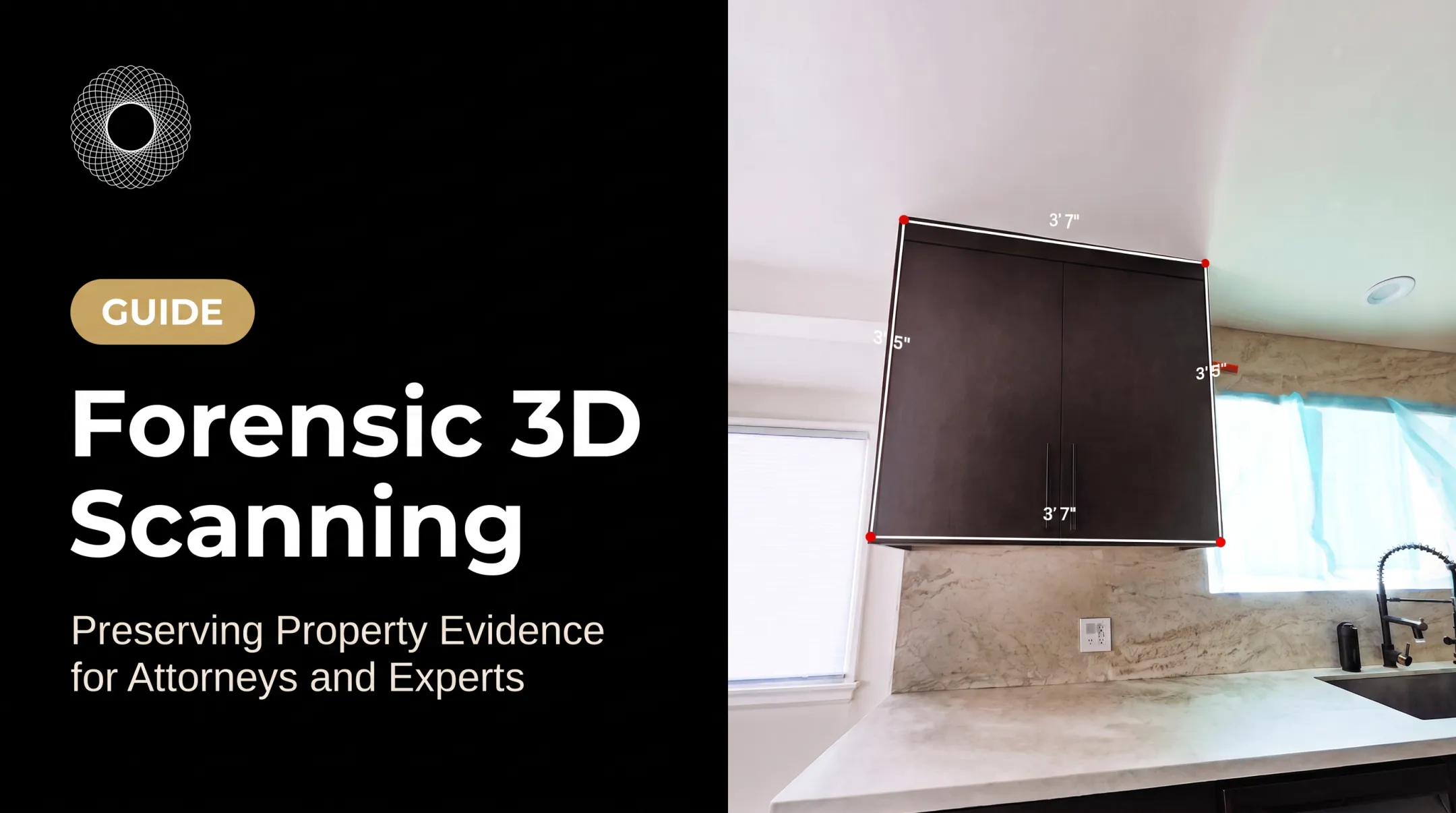
Vroomk captures rooms, elevations, and surroundings as an interactive 3D walkthrough. Reviewers can measure lengths, heights, and areas, export stills, and receive a private link. That helps counsel, insurers, experts, and project teams see the space without repeated site visits.
It also helps with concealed work. Framing, wiring, and MEP rough-ins disappear once drywall goes up. A scan taken while walls are open keeps a lasting reference when capture is permitted and done accurately.
Treat it as a supplement to original photos, plans, inspection reports, samples, and expert work. It does not guarantee admissibility, authenticity, causation, or liability. Scan-derived measurements still need a proper foundation under the governing evidence rules.
Preserve original files and integrity
Keep originals of photos, videos, scans, emails, and reports in an access-controlled repository, not just edited, compressed, or screenshot copies. NIST guidance recommends documenting file origin and transfer, using hashes to detect changes, and keeping backups.
Build an evidence index with:
- Item number, file type, date, and location
- Creator and related defect
- Storage location
- Transfer or modification history
Gather project and property records
Collect the project file early:
- Contracts, plans, specifications, and change orders
- Submittals, product data, invoices, and permits
- Inspection approvals, warranties, and maintenance records
- Prior complaints, estimates, and communications
- Pre-loss photos, progress captures, punch lists, and notices of deficient work
Then build a chronology covering discovery, notice, inspections, mitigation, repairs, testing, and claimed costs. Flag gaps instead of filling them with assumptions.
Use a defect log and evidence matrix
Give each defect a log entry:
- Issue number and exact location
- Date observed and visible symptoms
- Suspected system and immediate impact
- Temporary measures and related documents
- Next action
Map each allegation to its evidence. Note what remains unresolved:
- Cause and date of origin
- Extent and responsible party
- Repair method and cost
Use neutral wording such as "water staining observed below window" until an expert supports more.
How Documentation Supports Claims and Litigation
Connect evidence to the elements of a claim
Records help establish the building blocks of a claim:
- Condition, resulting damage, and financial impact
- Notice and timing
- Contractual expectation and deviation from plans or standards
- Mitigation steps taken
Elements differ by state and theory, so no single checklist applies everywhere.
Evidence showing what existed differs from expert evidence explaining why it occurred, who may be responsible, and what repair is appropriate. No single photo, scan, or report is certain to meet an evidentiary standard.

Coordinate inspections and expert analysis
Match specialists to the suspected system: inspectors, engineers, architects, envelope consultants, hygienists, or contractors. The inspection plan should set out:
- Non-destructive observations first
- Testing, sampling, and any destructive investigation
- Safety controls and documentation methods
- Who restores what afterward
ASTM E2128 offers a methodology for evaluating water leakage through exterior walls and notes that some methods are intrusive. Experts should compare the condition against:
- Contract documents and codes
- Manufacturer instructions and accepted practice
- Maintenance history and alternative causes
Build a claim-ready defect package
A solid package includes:
- Executive summary and project background
- Chronology and defect log
- Annotated visuals and 3D records
- Contracts, plans, and inspection reports
- Communications, mitigation records, repair scopes, invoices
- Expert opinions
Label exhibits consistently and cross-reference each defect to its location, file, date, finding, and claimed impact. Separate facts, technical opinions, legal analysis, and settlement communications as counsel directs.
Document damages and mitigation
Potential damage categories include:
- Repair or replacement
- Investigation costs and emergency mitigation
- Loss of use and business interruption
- Diminution in value and contents damage
An AGC damages guide notes most jurisdictions require reasonable mitigation. Recoverability varies by state and claim.
Tie every amount to estimates, invoices, receipts, and photos showing the cost was reasonable and connected to the defect. Record steps taken to prevent further damage, any relocation, and repair decisions that limit later inspection.
Account for U.S. legal deadlines
Limitation periods, repose periods, contractual notice, warranty periods, pre-suit inspection rules, arbitration clauses, and insurance notice requirements vary by state and contract.
- Florida generally requires notice 60 days before suit
- Texas requires 60 days, with contractor inspection rights
- California runs a prelitigation process for covered residential claims
Don't use an article to calculate your deadline. Talk to qualified counsel promptly. Early preservation matters most when a defect may be repaired, concealed, or altered by weather.
What to Do Immediately After Discovering a Defect
- Secure safety first. Block hazardous areas and stop active water or utility damage, documenting the original condition beforehand when reasonably possible.
- Notify in writing. Alert the relevant parties in writing, keep contracts, policies, warranties, photos, and repair records, and avoid speculating about fault.
- Arrange a documented inspection. Bring in technical professionals and counsel when damage is significant, safety or coverage is at stake, or litigation looms.
Timing can be tight. In one Vroomk customer case, a ceiling collapsed and the team scanned within hours, before the insurer removed damaged materials.
For urgent sites, Vroomk offers emergency capture within 24 hours in Los Angeles and Orange County areas, at $1.50 per square foot plus a $499 emergency add-on.

Documentation Mistakes That Can Weaken a Claim
- Weak photos: isolated, undated, unlabeled, edited, or low-resolution images can't show location, extent, or change over time
- Premature alteration: repairing, discarding, cleaning, or opening materials before notice and inspection invites spoliation arguments, unless safety demands it. Document any unavoidable change
- Unreported defects: AIA warns that a photographed defect left out of the field report creates risk
- Verbal-only communication: oral notices and unsupported conclusions leave no durable record for counsel or the insurer
- Missing maintenance history: gaps in service records make it harder to separate construction defects from wear or neglect
- Inconsistent file versions: conflicting copies and incomplete backups undercut chain-of-custody credibility
- Untraceable costs: allegations and dollar figures that cannot be tied to photos, reports, or invoices invite challenge
Frequently Asked Questions
What is considered a major defect in a building?
Major defects are generally judged by effects on safety, structural integrity, habitability, essential function, damage scope, or repair complexity. Legal definitions vary by state and contract.
What are the common building defects?
Common examples include foundation cracking, water intrusion, roof failures, plumbing leaks, faulty wiring, HVAC problems, and finish failures. Similar symptoms can have different causes.
What are the four types of construction defects?
Design, material, workmanship or construction, and subsurface deficiencies. Terminology and legal classifications differ by jurisdiction.
How should I document a building defect for a claim?
Preserve the condition, take wide and close photos with scale, record location and date, and keep original files. Gather project records, build a chronology, and get prompt expert and legal guidance.
Can photographs and 3D scans be used as evidence in construction defect litigation?
They can show condition and spatial context when preserved and authenticated. They generally supplement expert analysis, original records, and testing, and remain subject to applicable evidence rules.